
 Contact Us
 Directions
FY26 EDI error rates
Aug. 20, 2026
During the State of Minnesota’s 2025-2026 fiscal year, trading partners submitted 206,758 electronic data interchange (EDI) transactions. The 108 trading partners submitted transactions during the fiscal year with 70 sending higher volumes of greater than 100 transactions.
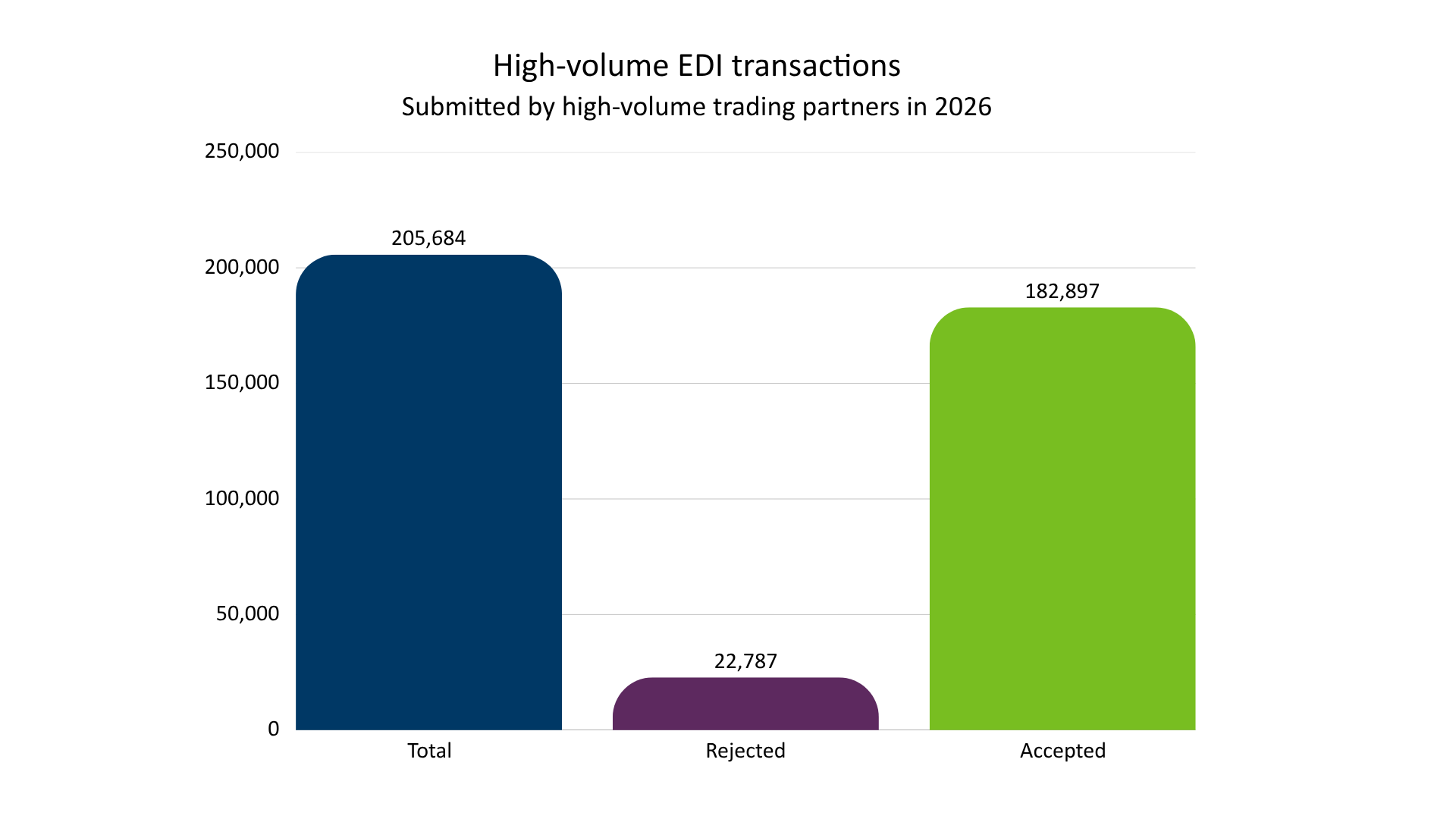
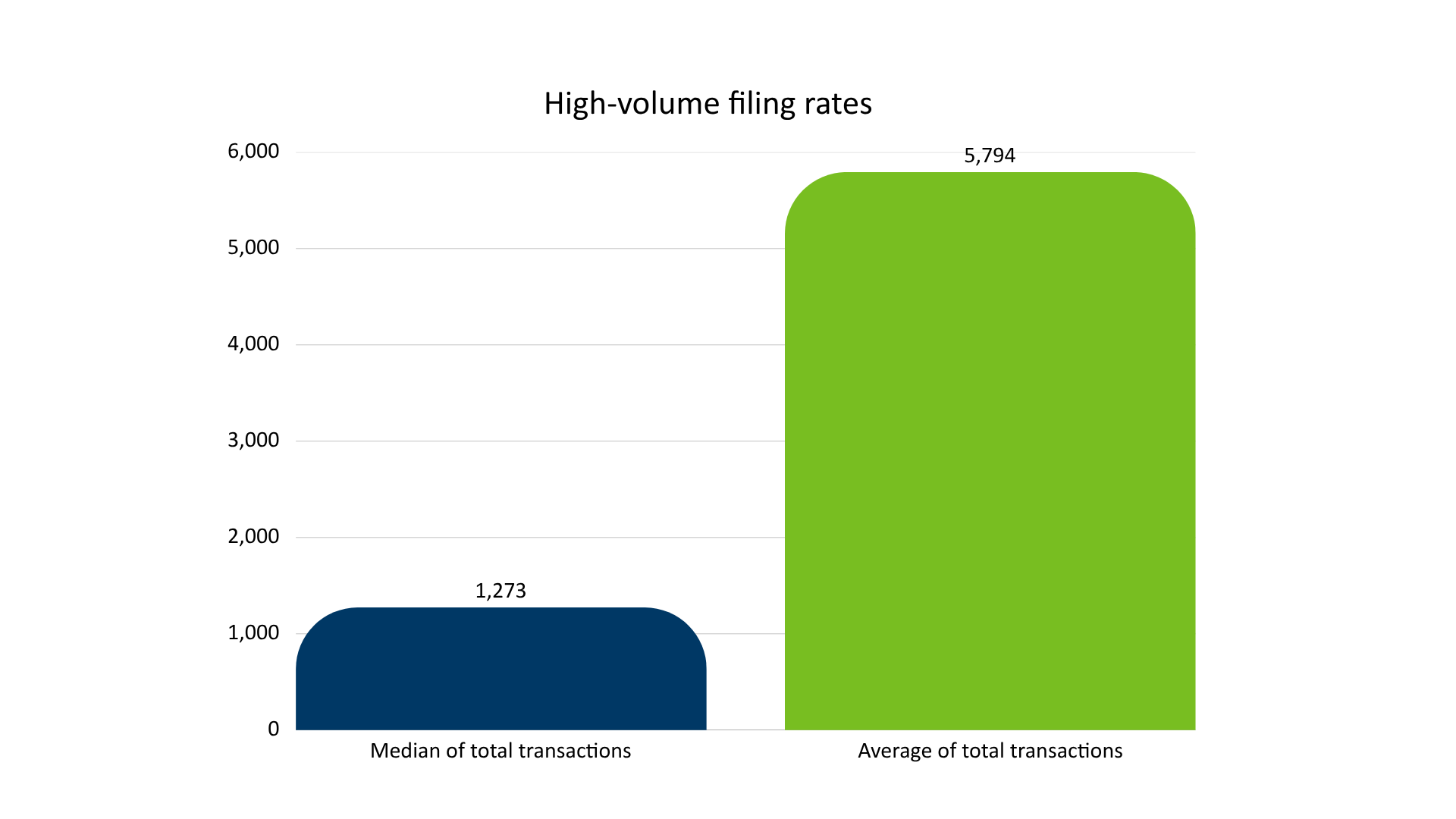
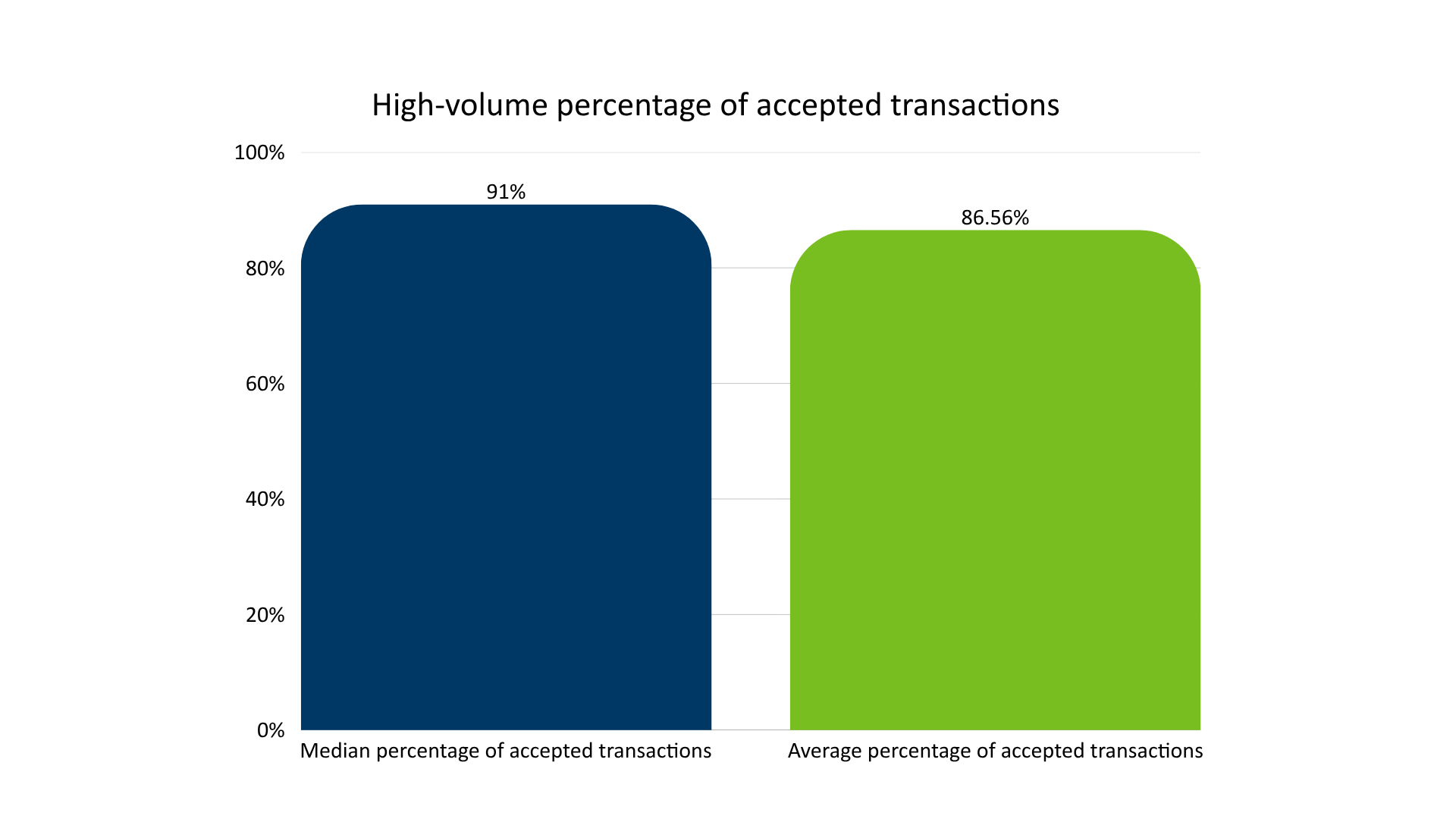
The greatest high-volume trading partner percentage of accepted transactions was 98 percent and was achieved by two trading partners. One sent 2875 transactions while the other sent 114 transactions. The highest volume trading partner, who submitted the most total transactions (26,693), had a 96 percent acceptance rate.
The lowest percentage of transactions accepted was 45 percent. The rate was received by two trading partners submitting 212 and 169 transactions respectively.
Error categories
During the fiscal year there were a total of 35,908 error messages returned to the trading partners. The most common types of error categories were benefits (44 percent), entities (25 percent) and dates (10 percent).
Benefit errors
Benefit errors occur when incorrectly reporting employee benefits. The category includes incorrectly reporting start and through dates, incorrectly reporting benefit types not previously reported, or advancing benefit information on an incorrect transaction.
Entity errors
Entity categories include employees, employers, insurers and third-party administrators (TPAs). Most entity-related errors occur because the information being submitted does not match current entity information or previously reported data.
Date errors
Date errors typically occur when disability and return to work dates are missing, calculated incorrectly or not correctly correlated to the claim type code.
Claim errors
Claim errors are specific to a claim and include errors on the jurisdiction claim numbers (JCN), claim administrator claim numbers (CACN), duplicate claims or incorrect dates of injury.
Transaction errors
Transaction errors occur when data sent doesn’t match or when a transaction is deadlocked with another process and the transaction was chosen as the deadlock victim and the transaction needs to be rerun. They also include structured validation errors which returned an error message of “NULL.”
Sequence errors
Sequence errors occur when the Maintenance Type Code (MTC) you are submitting cannot be submitted after the last submitted MTC. This includes when the SX – full suspension is submitted after another SX, or when an AU - acquired unallocated is submitted prior to the AQ - acquired.
Campus errors
Campus errors are defects that have been reported to DLI.
Change errors
Change errors occur when you are submitting a FROI or SROI 02. This includes when information is not submitted in the change segment and when the wrong change reason code is submitted.
Denial errors
Denial errors occur when submitting 04 – full denial. This indicates that information required on the 04 transaction is not being sent or the value doesn't meet requirements.
Conclusion
Minnesota’s overall fiscal year 2026 acceptance rate for all trading partners is 89 percent. While Minnesota does not grade trading partners on their acceptance rates, an accurate EDI reporting percentage ensures that the department and injured workers receive correct and timely claims information. Any questions regarding EDI transactions or the rejection error messages can be directed to the EDI team at dli.edi@state.mn.us.